Deadlines replace strategy
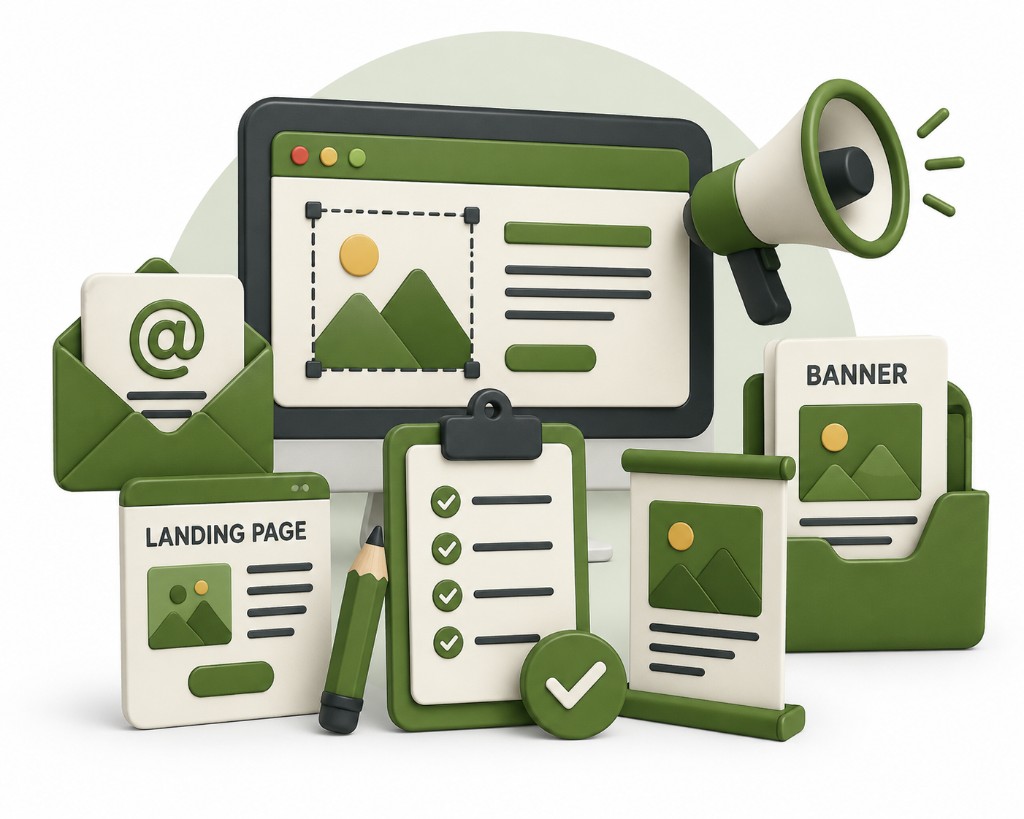
Assets that get launched under pressure often skip the alignment that makes campaigns effective.
Marketing & Performance
Keep launches moving with coordinated creative, targeting, tracking, and adjustments tied to real performance.
What clients feel first
Assets that get launched under pressure often skip the alignment that makes campaigns effective.
Ads, emails, landing pages, and social posts that are not coordinated dilute the overall message.
When campaign results are not properly reviewed, the next campaign starts from the same place.
Who we are
We plan, coordinate, and optimize campaigns across channels so every asset works toward the same goal — on time and with a clear result.




The work path
We discuss your goals, audience, timing, budget, and campaign idea, then provide a clear proposal.
After payment or deposit, we collect key materials and confirm the campaign scope, responsibilities, and timeline.
We define the objective, audience, offer, message, channels, customer journey, and KPIs in one campaign plan.
We develop the campaign theme, messaging, content sequence, and list of required creative assets.
We organize approvals, deadlines, and channel activities, then launch the campaign according to the approved calendar.
We track audience response and campaign performance, then adjust messaging, timing, or content where needed.
We compare results with the original goals and provide key findings and recommendations for future campaigns.
Cost of delay
Without timelines, assets, channels, and responsibilities organized, campaigns can feel rushed or inconsistent.
If tracking and reporting are not planned, it becomes difficult to know what worked, what failed, and why.
Campaigns need follow-up, optimization, and learning; otherwise, effort ends before the real improvement begins.
Success stories
Managing promotions across channels had become messy for our team. Evergrowth Digital's work brought more consistency and made execution feel less stressful.

Allison
Retail Marketing Manager
There were a lot of moving parts, and having someone keep the campaign aligned helped a lot. Evergrowth Digital's work felt more coordinated instead of pieced together last minute.

Evan
Hospitality Business Owner
The timelines, assets, and messaging were handled more smoothly than before. It made the whole campaign feel more organized from planning through launch.

Priya
Nonprofit Communications Lead
Sophia kept the campaign focused while still being flexible when things changed. That balance was useful because our team moves quickly and not always predictably.

Sean
Fitness Brand Founder
We've worked with agencies that were creative but not organized. This felt different — the campaign actually stayed on track and the pieces supported each other.

Rebecca
Community Program Manager

Shopify

WordPress

Framer

Webflow
Shopify
WordPress
Framer
Webflow
Shopify
WordPress
Shopify
WordPress
Framer
Webflow
Shopify
WordPress
Framer
Webflow
Shopify
WordPress
Next step
Organize the message, timeline, assets, channels, and reporting so each campaign moves with confidence.
FAQ
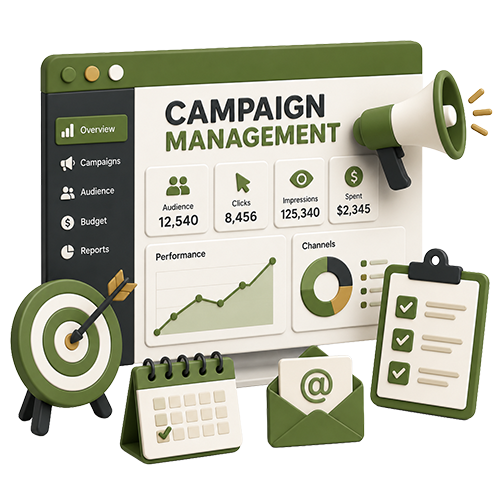
Campaign management is the process of planning, organizing, scheduling, launching, tracking, and improving marketing campaigns. It helps your business manage what campaign is happening, when it launches, which channels are involved, who is responsible, and how performance will be measured. For small businesses in Vancouver and the Greater Vancouver Area, campaign management helps turn scattered marketing ideas into an organized growth plan.
Evergrowth Digital's campaign management service may include annual campaign planning, monthly campaign calendars, promotional scheduling, campaign themes, channel planning, task coordination, content requirements, launch timelines, tracking setup, reporting, and post-campaign review. The goal is to help your business know what to promote, when to promote it, where to promote it, and how to measure the result.
Yes. We can help create a yearly campaign calendar that maps out important seasons, holidays, product launches, service promotions, content themes, email campaigns, ad campaigns, and local business opportunities. This is useful because your business can prepare assets, offers, landing pages, emails, and social content ahead of time instead of rushing right before each campaign.
Marketing strategy defines the bigger direction, such as your target audience, positioning, channels, and growth priorities. Campaign management turns that strategy into scheduled execution. Think of strategy as the business roadmap, and campaign management as the project calendar that keeps every launch moving on time.
We can help manage campaigns for seasonal promotions, product launches, service launches, lead generation, email marketing, social media, paid ads, local campaigns, website promotions, holiday campaigns, and customer retention campaigns. The campaign type depends on your business model, audience, sales cycle, and available marketing channels.
Yes. A big part of campaign management is project management. We can help organize campaign timelines, key dates, asset requirements, review deadlines, launch dates, and reporting dates. This helps reduce last-minute work and gives your team a clearer view of what needs to be done before each campaign goes live.
Yes. We can create campaign calendars that show campaign names, launch dates, channels, goals, target audience, content needs, offer details, landing page needs, email dates, ad dates, and reporting checkpoints. A campaign calendar works like a control panel for your marketing activities, helping your team stay aligned across the year.
Yes. Campaigns often involve multiple channels, such as email marketing, paid ads, social media, landing pages, website banners, blog content, and lead capture forms. Evergrowth Digital can help organize how these pieces connect so the campaign feels consistent across customer touchpoints instead of disconnected across platforms.
Campaign success can be measured through leads, sales, bookings, website traffic, email clicks, ad performance, conversion rate, cost per lead, customer engagement, revenue, and return on marketing investment. The right metrics depend on the campaign goal. For example, a brand awareness campaign may focus on reach and engagement, while a lead generation campaign should focus on qualified inquiries.
Your business may need campaign management if marketing feels rushed, inconsistent, reactive, or hard to measure. A clear campaign plan helps your team prepare earlier, coordinate channels, avoid missed opportunities, and learn from each launch. Instead of asking "what should we post this week?", campaign management helps you plan around business goals, customer timing, and real growth opportunities.