Subscribers stay passive
People who join a list without receiving the right message at the right moment rarely take action.
Marketing & Performance
Send timely, useful messages that bring people back, build trust, and make repeat action feel easy.
What clients feel first
People who join a list without receiving the right message at the right moment rarely take action.
Emails that are not connected to a clear customer journey feel random rather than relevant.
When existing contacts are not nurtured, the business stays dependent on expensive new traffic.
Who we are
We build email systems that move subscribers through a clear journey — from first contact to loyal customer — with the right message at the right time.




The work path
We begin with one free consulting session to understand your business model, audience, customer journey, current email platform, sales goals, and existing challenges. We then prepare a proposal outlining the recommended scope, timeline, and email marketing priorities.
After payment or deposit is received, the project officially begins. We collect access to your email platform, website, brand assets, customer data, existing templates, and analytics. You receive an onboarding checklist, confirmed timeline, and project roadmap.
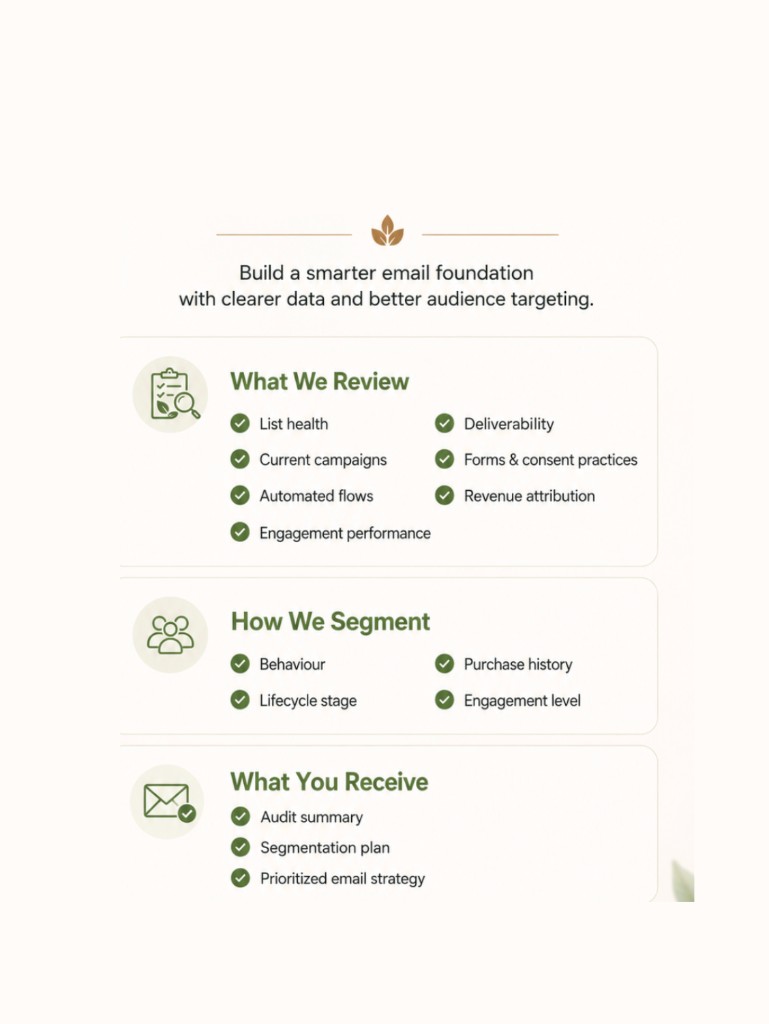
We review list health, current campaigns, automated flows, engagement, deliverability, forms, consent practices, and revenue attribution. We then map audiences based on behaviour, lifecycle stage, purchase history, or engagement. You receive an audit, segmentation plan, and prioritized email strategy.
We map the key moments where automated emails can support acquisition, conversion, retention, and re-engagement. You receive a lifecycle flow map covering sequences such as welcome, abandoned cart, post-purchase, win-back, review requests, or lead nurturing.
We create or refine email copy, subject lines, branded templates, calls to action, timing, triggers, and conditional logic. You receive campaign-ready templates and configured automated flows suited to your business and platform.
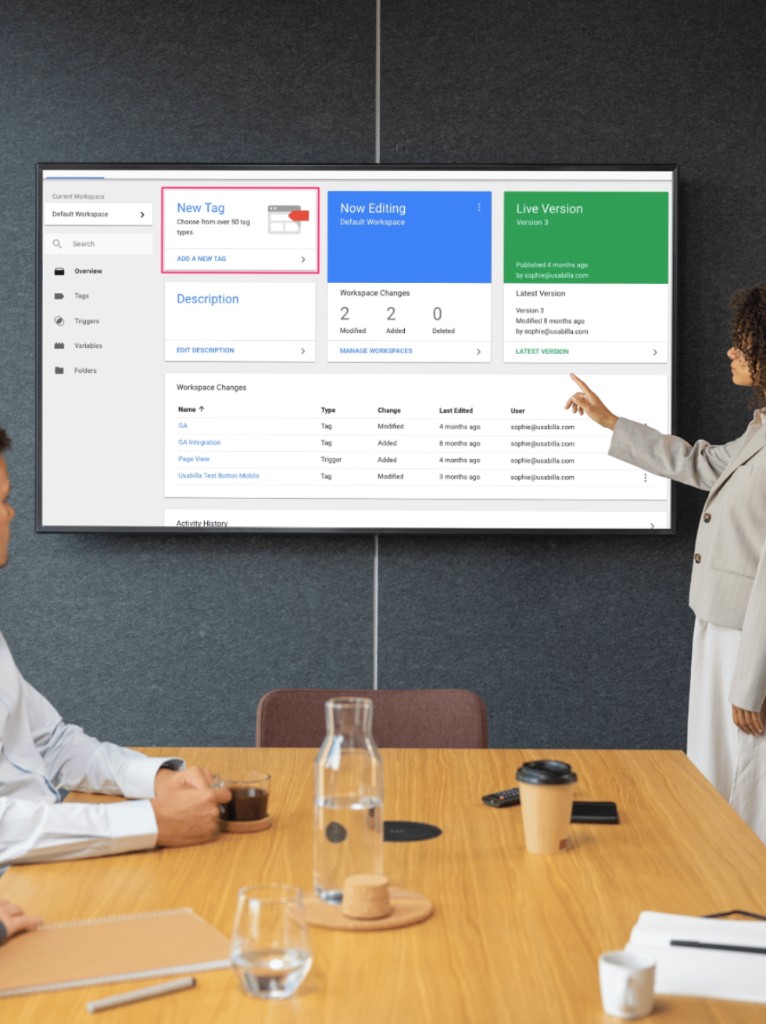
We create or improve sign-up forms, lead magnets, preference capture, and website integrations where included. We also verify tracking for sign-ups, clicks, purchases, form submissions, and attributed revenue.
We test links, personalization, mobile responsiveness, sender information, automation logic, audiences, tracking, and rendering before launch. You receive tested campaigns and flows with reduced risk of delivery or customer-experience errors.
We monitor deliverability, open rate, click-through rate, conversions, attributed revenue, unsubscribes, and subscriber growth. You receive performance reports, insights, and recommendations for future campaigns, segments, content, and automation improvements.
Cost of delay
Without consistent campaigns and flows, people who already showed interest may forget the brand before buying.
Abandoned carts, welcome offers, post-purchase follow-ups, and reactivation messages can be lost without automation.
Weak segmentation and generic content can train subscribers to ignore future emails.
Success stories
We had a list, but we weren't really using it well. The emails became more organized, more on-brand, and much more useful for staying connected with customers.

Julia
Boutique Owner
The flows helped us follow up in a more professional way without making everything feel automated in a cold sense. Customers were getting clearer messages at better times.

Ahmed
Supplement Brand Founder
Before this, email was something we sent only when we remembered. Sophia helped build a more consistent system, and that made the channel feel much more valuable.

Stephanie
Bakery Owner
The campaigns looked cleaner and the messaging felt more focused. We also had a better understanding of what types of emails people were actually responding to.

Raymond
Online Store Manager
What changed most was the structure. Instead of random newsletters, we had a more thoughtful email journey that made the brand feel more dependable.

Tina
Wellness Brand Founder
Shopify

WordPress
Framer
Webflow
Shopify
WordPress
Framer
Webflow
Shopify
WordPress
Shopify
WordPress
Framer
Webflow
Shopify
WordPress
Framer
Webflow
Shopify
WordPress
Next step
Create campaigns and automated flows that keep subscribers engaged, informed, and moving toward purchase.
FAQ
Our email marketing service includes email platform setup, campaign planning, tracking setup, audience segmentation, A/B testing, email design, copywriting support, campaign launch, and performance review. For businesses in Vancouver and the Greater Vancouver Area, we focus on building email campaigns that are organized, measurable, and aligned with your customer journey.
Yes. Email marketing is still valuable because it lets businesses communicate directly with people who have already shown interest, such as subscribers, leads, past customers, or website visitors. Unlike social media, where reach depends heavily on platform algorithms, email gives your business a more direct channel for promotions, updates, education, reminders, and customer retention.
Email marketing setup may include platform configuration, audience list setup, signup form connection, sender settings, basic tracking, email templates, segmentation structure, campaign categories, and testing before launch. The goal is to make sure your email system is ready to collect contacts, send campaigns, and measure results properly.
Yes. We can help set up tracking so you can better understand email performance, including opens, clicks, conversions, traffic sources, campaign links, and customer actions after clicking an email. Depending on your platform and website setup, this may involve UTM tracking, email platform analytics, Google Analytics, website events, or e-commerce tracking.
Email segmentation means grouping your audience based on shared traits or behaviours, such as new subscribers, past customers, repeat buyers, inactive contacts, location, interests, or purchase history. Segmentation matters because different customers should not always receive the same message. For example, a new lead may need education, while a repeat customer may respond better to loyalty offers or product recommendations.
Yes. We can help test different subject lines, preview text, email content, calls-to-action, send times, or design variations. A/B testing helps reduce guessing by comparing two versions of an email and using performance data to understand what works better. This is especially useful when you want to improve open rates, click-through rates, conversions, or campaign engagement.
Yes. We can help plan, build, test, schedule, and launch email campaigns for promotions, newsletters, product announcements, events, seasonal offers, lead nurturing, and customer retention. Before launch, we review key details such as audience segment, subject line, links, layout, mobile display, tracking, and call-to-action.
We can support different types of email campaigns, including newsletters, promotional emails, welcome emails, product updates, service announcements, abandoned cart emails, re-engagement emails, customer education emails, and seasonal campaigns. The best campaign type depends on your business model, audience, offer, and sales cycle.
Email marketing success can be measured through open rate, click-through rate, conversion rate, revenue, form submissions, bookings, unsubscribe rate, bounce rate, list growth, and engagement over time. We focus on the metrics that connect to your business goal, not just vanity numbers. For example, a campaign with fewer opens but more qualified leads may be more valuable than a campaign with many opens but no action.
It depends on your business. Campaigns are one-time or scheduled emails, such as newsletters or promotions. Automation sends emails based on triggers, such as signup, purchase, cart abandonment, or inactivity. If you want consistent customer follow-up without manually sending every message, automation may be useful. If you mainly need announcements or monthly updates, campaign launches may be enough to start.