Friction hides in plain sight
A site that looks functional can still have UX, speed, and messaging issues users notice immediately.
Marketing & Performance
Find the hidden leaks in message, speed, UX, SEO, and tracking before they cost another month of traffic.

What clients feel first
A site that looks functional can still have UX, speed, and messaging issues users notice immediately.
Speed, SEO, content, UX, and conversion problems rarely appear in one place or fix with one change.
Knowing that a site has problems is not the same as knowing which ones to fix first.
Who we are
We examine the full site — speed, SEO, UX, copy, and conversion paths — and deliver a prioritized action plan based on what will move the business forward.




The work path
We begin with one free consulting session to understand your website, business goals, target audience, current challenges, and areas of concern. We then prepare a proposal outlining the audit scope, timeline, tools, and expected deliverables.
After payment or deposit is received, the project officially begins. We collect the required website, Semrush, GA4, Google Search Console, or CMS access where available. You receive an onboarding checklist and confirmation of the pages and performance areas included in the audit.
We use Semrush and supporting tools to examine crawlability, indexing, broken links, redirects, duplicate content, metadata, page speed, mobile usability, HTTPS, structured data, and other technical concerns. These findings are organized by severity and business impact.
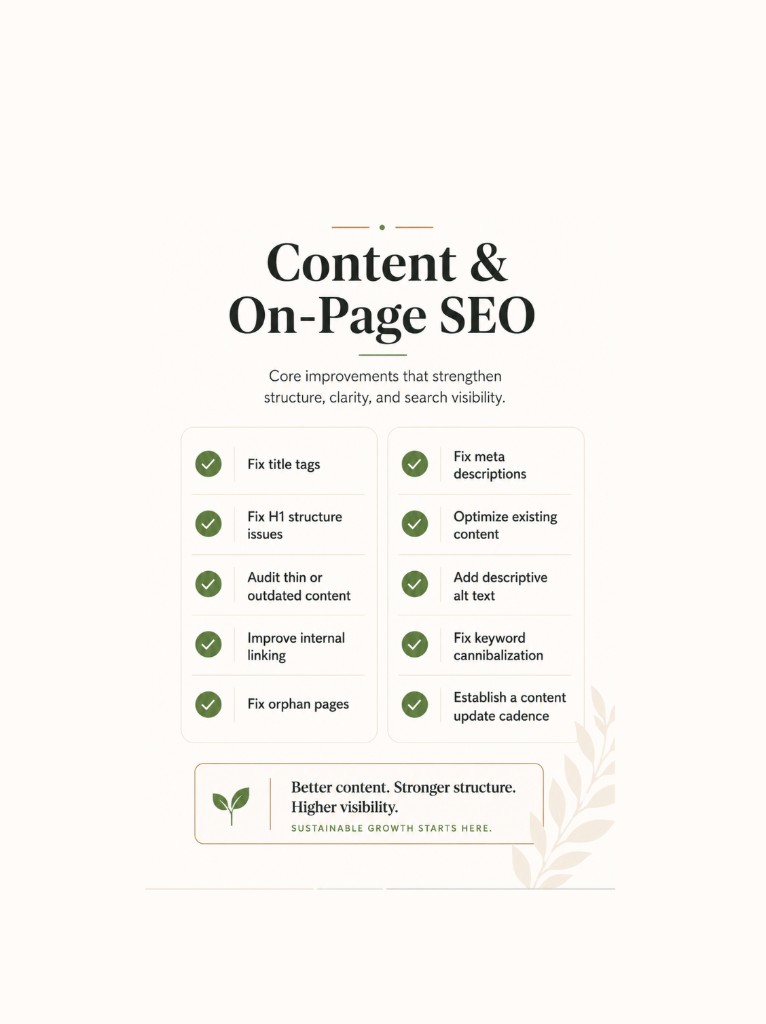
We assess keyword visibility, page targeting, content quality, internal linking, backlinks, competitor performance, and missed search opportunities. You receive insights into where the website is underperforming and where stronger visibility may be possible.
We review navigation, page structure, calls to action, forms, mobile experience, trust signals, content clarity, and potential conversion barriers. Where data is available, we also examine traffic behaviour, engagement, and important user journeys.
We combine the findings into a clear website audit report with screenshots, issue explanations, severity levels, and recommended solutions. Actions are prioritized by urgency, potential impact, and implementation effort so your team knows what to address first.
We schedule a consultation session to go through the report with you, explain the findings in practical language, answer questions, and discuss realistic solutions. You receive strategic insights and a clearer understanding of the website's strengths, risks, and opportunities.
We provide a structured action plan covering immediate fixes, medium-term improvements, and longer-term opportunities. You may implement the recommendations internally or request a separate proposal for Evergrowth to complete the approved work.
Cost of delay
Broken links, unclear CTAs, slow pages, weak copy, or poor mobile layout can keep hurting performance unnoticed.
Without an audit, teams may spend time on cosmetic updates while bigger conversion problems remain.
If tracking, structure, or user flow is flawed, the business may make decisions based on incomplete signals.
Success stories
We knew the site had issues, but we didn't have a clear picture of what mattered most. Evergrowth Digital's audit gave us a useful breakdown of problems and priorities.

Mark
Law Firm Owner
It was helpful to see the website reviewed from both a user and business perspective. The recommendations were specific enough that we could actually act on them.

Denise
Medical Practice Manager
Evergrowth Digital's audit pointed out things we had overlooked for a long time, especially around clarity, page structure, and friction. It gave us a much better starting point.

Kevin
Trade Business Owner
Arjun helped identify several technical and usability gaps that were affecting the experience. It wasn't just criticism — it was a clear path forward.

Joanne
E-commerce Manager
I appreciated that Evergrowth Digital's audit was honest and practical. It showed what was performing well, what wasn't, and where the biggest opportunities were.

Ben
Consultant

Shopify

WordPress
Framer
Webflow
Shopify
WordPress
Framer
Webflow
Shopify
WordPress
Shopify
WordPress
Framer
Webflow
Shopify
WordPress
Framer
Webflow
Shopify
WordPress
Next step
Review your website structure, speed, content, UX, SEO, and conversion path to uncover what needs fixing first.
FAQ
A website audit is a detailed review of your website's performance, structure, content, SEO, user experience, technical setup, and conversion flow. It helps identify what is working, what is hurting performance, and what should be improved first. For Vancouver and Greater Vancouver businesses, a website audit can show why visitors are not finding, trusting, or contacting your business.
Evergrowth Digital's website audit service may include SEO review, technical website checks, page speed review, mobile experience review, content structure, heading hierarchy, calls-to-action, forms, navigation, internal links, tracking setup, and conversion issues. The goal is to provide a practical report, not just a list of technical problems.
You may need a website audit if your website gets traffic but few leads, ranks poorly on Google, loads slowly, has outdated content, looks inconsistent, or does not clearly explain your services. A website audit helps you find the real bottlenecks before spending more money on ads, SEO, redesign, or development.
No. An SEO audit mainly focuses on search visibility, indexing, keywords, metadata, content, backlinks, and technical SEO. A website audit is broader. It can include SEO, UX, speed, design, content clarity, conversion paths, forms, tracking, and business messaging. Think of an SEO audit as checking how people find the website, while a website audit checks how well the whole website works after they arrive.
Yes. A website audit can identify conversion problems such as unclear headlines, weak calls-to-action, confusing service pages, poor form placement, missing trust signals, slow loading pages, or mobile usability issues. For example, if visitors land on your service page but do not submit a form, the problem may be the message, layout, offer, form, or lack of proof.
Yes. Website speed and mobile experience are important parts of a website audit. We may review loading time, image size, layout shifts, mobile readability, button spacing, form usability, and overall responsive design. Technical audit checklists often include crawlability, indexing, HTTPS, structured data, metadata, internal linking, and Core Web Vitals.
Yes. A useful audit should give you clear findings and prioritized recommendations. Evergrowth Digital focuses on explaining what the issue is, why it matters, where it appears, and how it can be improved. The final output may include a report, priority list, screenshots, page-level notes, and next-step recommendations.
We can start with your website URL, but the audit becomes stronger if you can provide access to Google Analytics, Google Search Console, Google Tag Manager, heatmaps, CRM/form data, ad campaign data, or previous SEO reports. These tools help connect website issues with real traffic, behaviour, and conversion data.
A small business website should usually be reviewed at least once or twice a year, or before major campaigns, redesigns, SEO projects, or paid ad launches. If your website changes often, receives regular traffic, or supports e-commerce and lead generation, more frequent audits can help catch problems earlier.
Free automated scans can catch surface-level issues, but they often miss business context, user intent, messaging problems, conversion friction, and priority. A professional website audit combines tools with human review. It is like a health check: the machine can show numbers, but you still need interpretation to understand what matters most and what to fix first.