A homeowner in Maple Ridge searches for a renovation service.
A parent in Mission looks for a local tutor.
An online shopper in Toronto searches for a product your Vancouver-based store already sells.
Your website may offer exactly what they need. But when search engines cannot understand the page—or the content does not match the search—they find someone else first.
That is the frustration SEO is designed to solve.
SEO Is More Than Adding Keywords
Repeating a popular phrase across a page does not automatically make it useful.
Search engines need to understand:
- What the page is about
- Which customer need it answers
- How it connects with the rest of the website
- Whether it is accessible and technically reliable
- Why it deserves visibility over competing pages
Effective SEO optimization brings content, website structure, technical performance, and customer intent together.
Start With Search Intent
Imagine someone searching:
physiotherapy Port Coquitlam
They are probably looking for a nearby clinic, services, availability, trust signals, and a way to book.
Now compare that with:
how long does knee rehabilitation take
This person is looking for information before choosing a provider.
Both searches relate to physiotherapy, but they require different pages.
| Search intent | Suitable content |
|---|---|
| Local service | Location or service page |
| Research | Helpful blog article |
| Comparison | Service comparison or buying guide |
| Purchase | Product or collection page |
| Brand search | Homepage or company information |
Practical tip: Give each page one search purpose
Choose one main question or intention for every important page.
Trying to rank one page for several unrelated services often weakens its focus.
Make Sure Search Engines Can Reach the Page
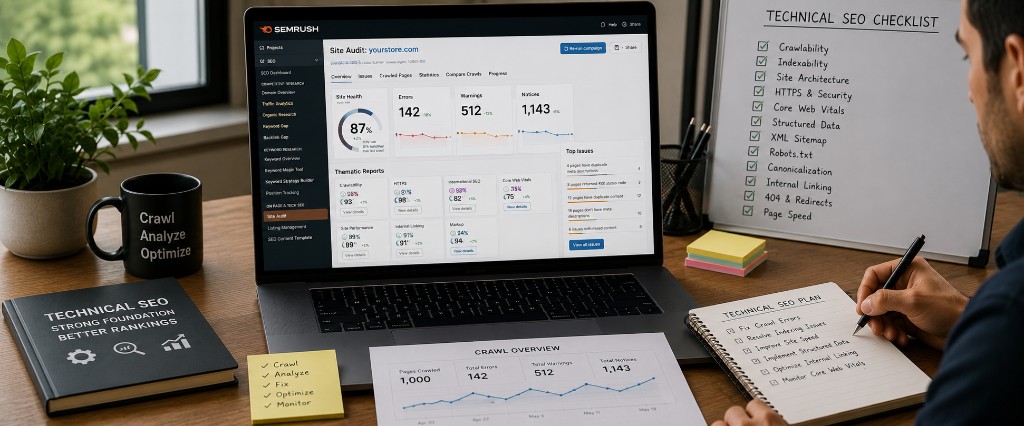
Before a page can rank, search engines must be able to discover, crawl, and index it.
Technical problems may include:
- Important pages blocked by robots.txt
- Incorrect noindex tags
- Broken internal links
- Redirect chains
- Duplicate URLs
- Missing canonical tags
- Poor mobile performance
- Slow server response
- Orphan pages with no internal links
A beautifully written service page cannot attract organic traffic when search engines cannot reliably access or interpret it.
Use Google Search Console to check indexing, sitemap coverage, search queries, and page-level issues.
Build a Clear Website Structure
Think of the Sea-to-Sky Highway.
Drivers understand where they are going because the route, exits, and signs create a clear path. A website needs a similar structure.
For example:
Home → Services → SEO Optimization → Technical SEO Article
A clear hierarchy helps customers navigate while showing search engines how topics relate.
Internal links should use descriptive wording. Instead of writing "click here," link phrases such as improve your website copy or strengthen local search visibility.
Practical tip: Find orphan pages
Review important service and blog pages.
If no other relevant page links to one of them, it may be difficult for both visitors and search engines to discover.
Add links where they naturally help readers continue learning.
Optimize the Page, Not Just the Title
On-page SEO includes more than adding the primary keyword to the title.
Review:
- Page title and meta description
- One clear H1 heading
- Logical H2 and H3 sections
- Search-focused introduction
- Descriptive image alt text
- Clean URL
- Internal links
- Useful calls to action
- Structured data where appropriate
The page should be understandable even if the visitor never thinks about SEO.
A contractor in Langley does not need a paragraph filled with variations of "Langley contractor." They need content explaining the service, process, service area, common concerns, and next step.
Fix Keyword Cannibalization
As websites grow, several pages may begin targeting the same search.
For example:
- /seo-services
- /seo-optimization
- /best-seo-vancouver
- /vancouver-seo-company
When these pages serve almost the same purpose, search engines may struggle to determine which one should rank.
Possible solutions include:
- Combining overlapping pages
- Giving each page a distinct intent
- Redirecting outdated content
- Improving internal-link signals
- Updating titles and headings
More pages do not always create more visibility. Sometimes they divide authority across competing URLs.
Create Content That Supports Decisions
A strong blog does more than attract visitors who may never need the business.
It answers questions potential customers ask before contacting or purchasing.
A Squamish tourism company might publish guides about seasonal experiences. A clinic in Delta could explain treatment options. A Shopify retailer selling across Canada and the United States might publish product comparisons, care guides, or shipping information.
Useful content can lead readers naturally toward relevant services and products.
It can also support AEO and GEO optimization by presenting clear questions, direct answers, structured information, and credible expertise that search and AI platforms can interpret.
Improve Speed Without Chasing a Perfect Score
Page speed matters because slow experiences frustrate visitors and make websites harder to use.
Common causes include:
- Oversized images
- Excessive plugins
- Heavy JavaScript
- Unused CSS
- Too many tracking scripts
- Slow hosting
- Third-party widgets
- Poor caching
Do not optimize only to produce a perfect testing score.
Prioritize real customer journeys: the homepage, primary service pages, product pages, forms, and checkout.
Technical fixes may require WordPress customization, Shopify optimization, or custom web development, depending on the platform.
Measure Business Results
Rankings are useful, but ranking alone does not pay the bills.
Track outcomes such as:
| Metric | What it shows |
|---|---|
| Search impressions | How often pages appear |
| Organic clicks | How often searchers visit |
| Non-branded traffic | Discovery beyond the company name |
| Qualified enquiries | Leads generated through search |
| Organic revenue | E-commerce sales from organic visits |
| Conversion rate | Whether traffic takes action |
| Indexed pages | Whether important content is discoverable |
A keyword moving from position 30 to 12 is progress. A page generating qualified enquiries is business impact.
Connecting SEO with conversion rate optimization helps ensure that improved visibility also creates a clearer path toward booking, contacting, or purchasing.
Build Visibility That Compounds
Paid advertising can place your business in front of customers quickly, but visibility slows when spending stops.
SEO works differently.
A useful page can continue attracting visitors, earning links, and supporting customer decisions long after it is published—provided it remains accurate, technically healthy, and relevant.
Begin with the pages closest to revenue. Fix the technical barriers. Match each page to a clear search intent, strengthen internal links, publish useful supporting content, and measure what happens after visitors arrive.
Your customers are already searching.
The goal is to make your strongest pages easier to find when those searches happen.
Explore SEO optimization services and build a more sustainable path from search visibility to business growth.